 PyPSA
Welcome to the
PyPSA Community!
PyPSA stands for Python for Power System Analysis.
Free. Open-Source. Batteries included.
Features
PyPSA Framework
An open-source Python framework for optimising modern power systems with conventional generators, renewable energy, storage, and multi-sector coupling - designed for researchers and planners.
Model short-term market dispatch with unit commitment, renewables, storage, multi-carrier conversion, and more.
Optimize power flow in AC-DC networks using linearized KVL/KCL constraints with optional loss approximations.
Ensure system reliability by accounting for line outage contingencies under N-1 conditions.
Plan long-term infrastructure investments for generation, storage, transmission, and conversion with continuous or discrete options.
Co-optimize multi-period investments to design energy transition pathways with perfect foresight planning.
Solve large-scale problems sequentially with myopic foresight and dynamic updates across time horizons.
Two-stage stochastic programming for uncertainty handling with weighted scenarios and separate investment-dispatch decisions.
Explore alternative system designs with similar costs to understand trade-offs and decision flexibility.
Built-in support for CO₂ limits, subsidies, resource limits, expansion limits, and growth constraints.
Impose custom objectives, variables and constraints using Linopy for specialized requirements.
Support for wide range of LP, MILP, and QP solvers from open-source to commercial solutions.
Ecosystem
Framework and Tools
PyPSA and its complementary tools and initiatives

A Lightweight Python Package for Calculating Renewable Power Potentials and Time Series


Python for Power System Analysis - the core framework for simulating and optimising modern power systems

Community-driven initiative mapping the world's electrical grids to accelerate the energy transition worldwide

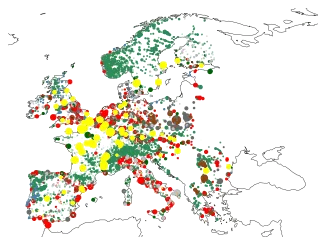
A Lightweight Python Package for Calculating Renewable Power Potentials and Time Series
Python for Power System Analysis - the core framework for simulating and optimising modern power systems
Community-driven initiative mapping the world's electrical grids to accelerate the energy transition worldwide
Implementations
PyPSA Models
Open Energy System Models built with PyPSA
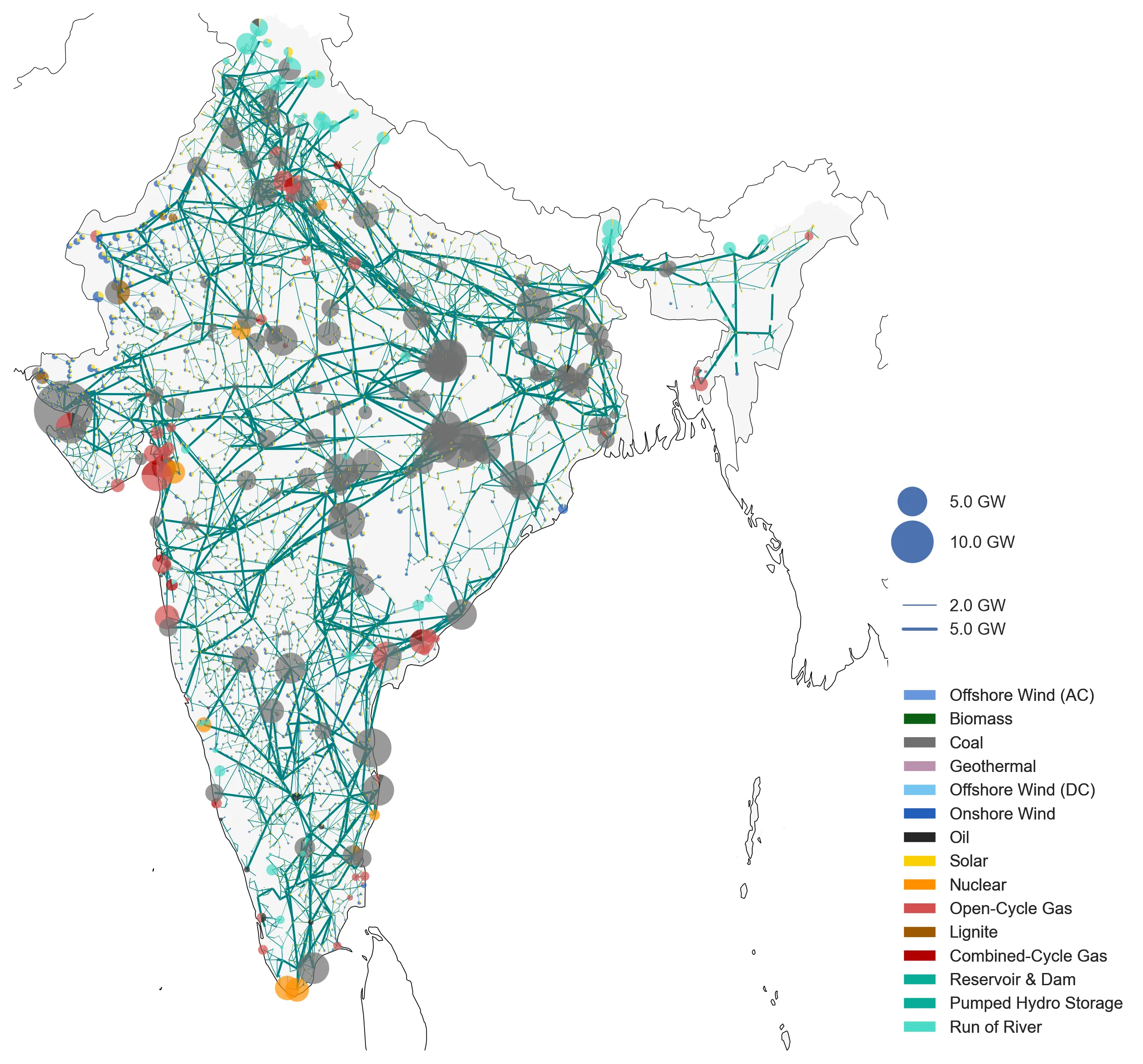
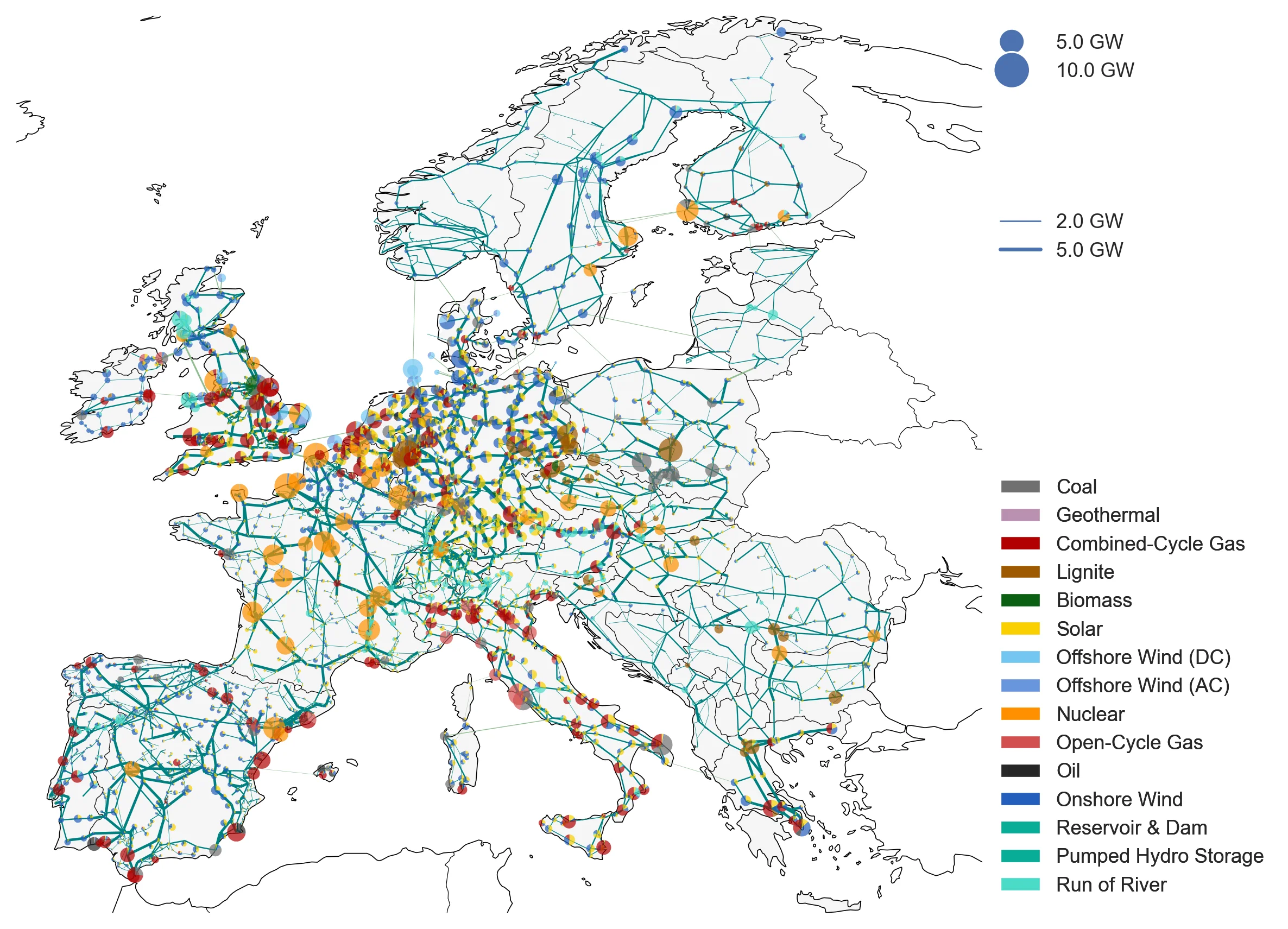
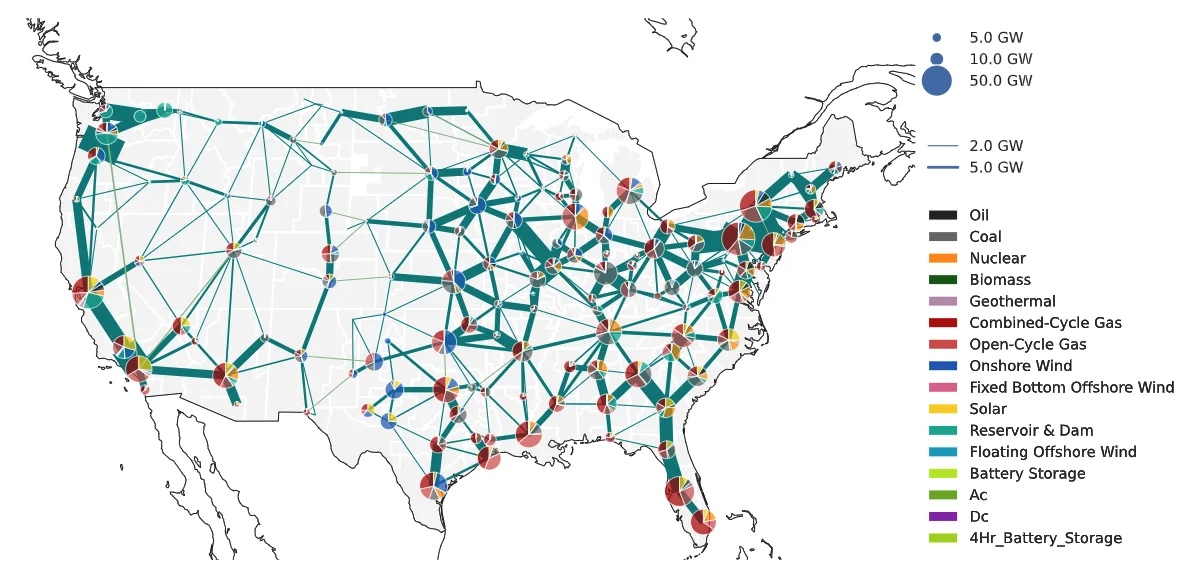
A flexible Python-based open optimisation model to study energy system futures around the world


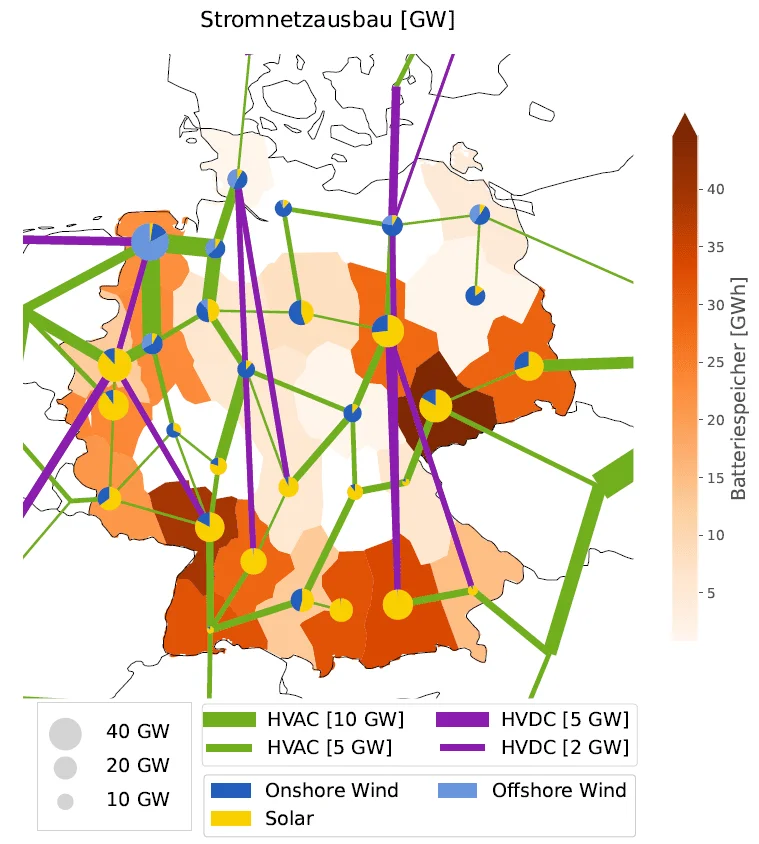
High resolution, sector-coupled model of the German Energy System
A flexible Python-based open optimisation model to study energy system futures around the world
High resolution, sector-coupled model of the German Energy System
Contributors
Community
The people who power PyPSA






























Last updated: Apr 2, 2026
References
Related Research
Numerous research publications are built on the PyPSA environment. Here we highlight some of them. For an extended list, have a look at the up-to-date Google Scholar query.
PyPSA: Python for power system analysis
T Brown, J Hörsch, D Schlachtberger - arXiv preprint arXiv:1707.09913, 2017 - arxiv.org
2017 · 895 citations
Synergies of sector coupling and transmission reinforcement in a cost-optimised, highly renewable European energy system
T Brown, D Schlachtberger, A Kies, S Schramm… - Energy, 2018 - Elsevier
2018 · 890 citations
On the history and future of 100% renewable energy systems research
C Breyer, S Khalili, D Bogdanov, M Ram… - IEEe …, 2022 - ieeexplore.ieee.org
2022 · 568 citations
Classification and challenges of bottom-up energy system models-A review
MG Prina, G Manzolini, D Moser, B Nastasi… - … and Sustainable Energy …, 2020 - Elsevier
2020 · 488 citations
Trends in tools and approaches for modelling the energy transition
M Chang, JZ Thellufsen, B Zakeri, B Pickering… - Applied Energy, 2021 - Elsevier
2021 · 429 citations
Last updated: Nov 24, 2025